chess moves
♚
The King
1 piece
The King can move just one square at a time in any direction. It should be defended at all times by the other pieces because once checkmated the game is lost, it's over!♛
The Queen
1 piece
The most powerful piece on the board, the Queen can move any number of squares in straight lines or on the diagonal until obstructed by another piece.♜
The Rook
2 pieces
After the Queen the Rook is the next most powerful piece on the board (in a 2D or two dimensional board [Length x width]). It can move any number of squares in a straight line until obstructed by another piece.♝
The Bishop
2 pieces
The Bishop can move any number of squares on the diagonal until obstructed by another piece. Each Bishop will always occupy squares of the same colour as it's starting square.♞
The Knight
2 pieces
The Knight can move in the shape of an "L" (2 squares then left or right) or to any of the eight squares of the opposite colour to the one on which it stands that are either two ranks or two files away. It's move is not obstructed by other pieces.♟
The Pawn
8 pieces
Considered the weakest piece on the board the Pawn can only move forward one square at a time on the same file, except for it's first move when it may move one or two squares forward. On reaching the eighth rank a Pawn can be promoted to the value of any other piece except the King. It captures diagonally forward. Another special move is en passant (French: [ɑ̃ pasɑ̃], lit. "in passing") describes the capture by a pawn of an enemy pawn on the same rank and an adjacent file that has just made an initial two-square advance.[2][3] The capturing pawn moves to the square that the enemy pawn passed over, as if the enemy pawn had advanced only one square. The rule ensures that a pawn cannot use its two-square move to safely skip past an enemy pawn. Capturing en passant is permitted only on the turn immediately after the two-square advance; it cannot be done on a later turn.[4] The capturing move is sometimes notated by appending the abbreviation e.p.♚ ♛ ♜
All the pieces quick review:
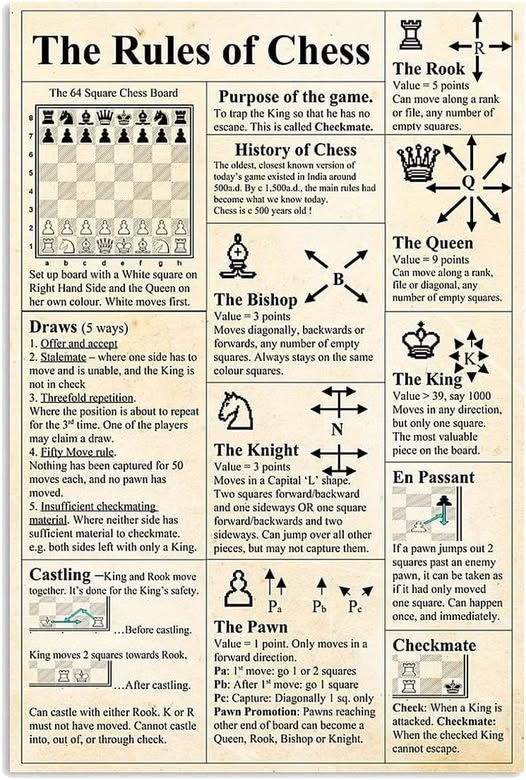
♝ ♞ ♟
All the pieces, The Details:
♚ ♛ ♜
Two Knights can control:
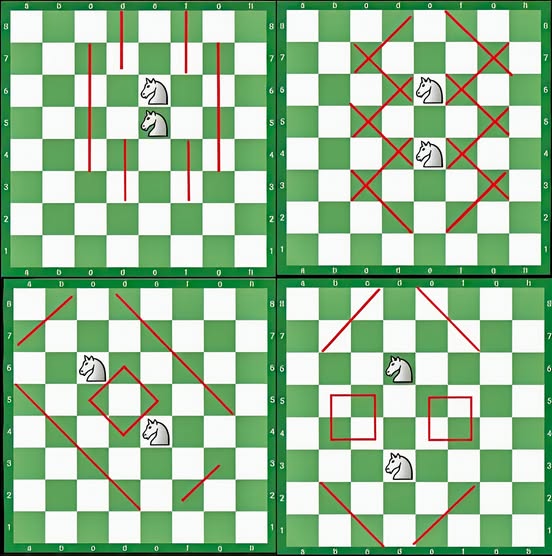
♚ ♛ ♜
A Piece Of Advice:
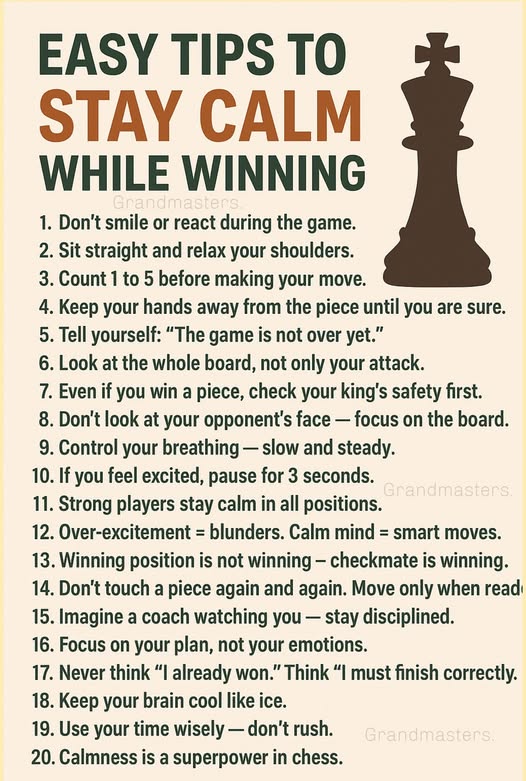
See also: Chess History
Chess: Knights Tour to see how it's done. Now Test Yourself!