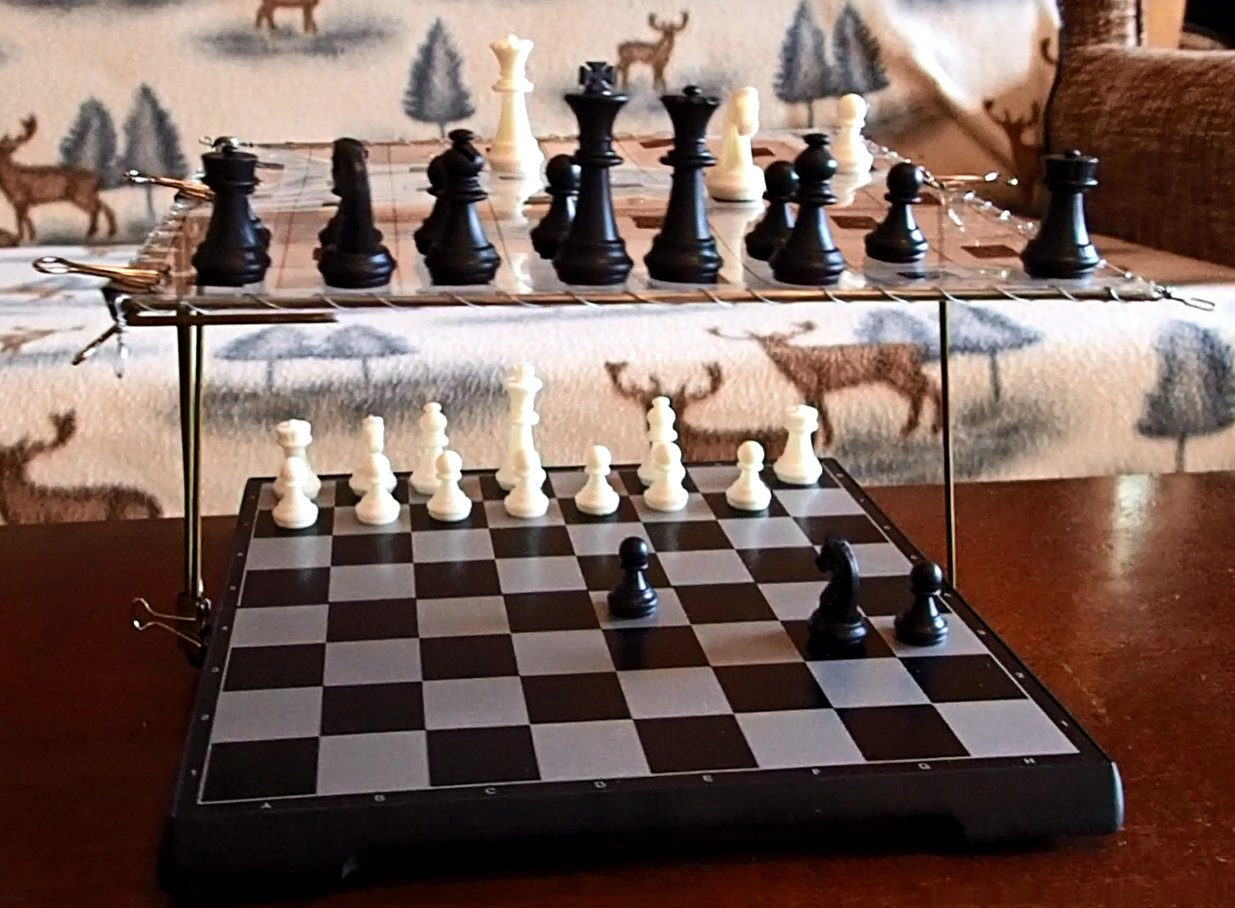
3D Chess Introduction
Welcome!
You are now entering another dimension of strategy.
A strategy which involves more than one board — in a game.
Just when you thought it was safe
to play strategy games…
Discover The Final Frontier of the Third Dimension.
You are now entering, The Dimensional Zone.
‘CHESS — THE NEXT GENERATION’ of players as well as long time players, will find themselves moving into the future with this traditional game. This exciting game relies on all the regular instructions for chess. However because of the dimensional factor, there is a need for additional instructions as to how the pieces move dimensionally. This set of instructions explains only the dimensional movement of the pieces. This also applies to and is explained here too, the new game “3D Chess960″.
"Chess - The Next Generation"
The top game board is labeled “A”, and the bottom board is “B”. The WHITE chess pieces are set up on level “A” or “B” (which ever he or she wants) in the traditional manner as in regular chess. Then the BLACK pieces are set up in the traditional manner as in regular chess but on the other board level. Therefore if WHITE is on board level “B” then BLACK will be on level “A”. When you switch colours for the 2nd or more games, the person now playing WHITE has the choice of board levels.
MOVEMENT of chess pieces:
All movement of chess pieces on any one board level remains the same as in regular chess. The movement from one board level to another is as follows (see also diagram above).
KING: Can move to or capture all squares one square away from it (either diagonally or straight up and down), one level below or above the square on which it is currently sitting.
QUEEN: Same as king.
(If on Ad2, it controls 9 squares directly below it on B)
ROOK: Can move to or capture one square directly below or above the square on which it is sitting. (eg. Aa1 controls/captures Ba1)
BISHOP: Movement similar to that of the king except it cannot move directly above or below the square on which it is sitting (opposite to a rook). This dimensional movement allows the bishop to move on an ‘angle’, to/or capture a white or black square. (Opening: Ac1 — Bb1, Bb2, Bc2, bd1, Bd2)
KNIGHT: Moves like an “L” dimensionally. Therefore, it moves one square down or up from the square on which it is sitting followed by movement two squares forward, (sideways or backwards). (eg. Ab1 controls/captures Bb3, Bd1)
PAWN
- Pawns on their original squares on level “A” have the option of advancing one or two squares on level “B”. It thus mirrors a pawn’s opening move in regular chess. (Aa2 — Ba3, Ba4, opening the rook file)
- Can move to the squares directly below or above the square on which it is sitting.
Down or up does NOT constitute a backward movement. - Can advance down diagonally straightforward on the file or advance up diagonally straightforward. (Ba4 — Aa5)
- Can capture diagonally forward, left or right of the square that it is on, one level below or above it. (Ba4 x Bb5, or Ab5)
- Upon reaching the opposite side of the board on any level, can be promoted to Queen, etc., and is distinguished as such for eg., by putting a red checker piece underneath it.
- Dimensional en passant capture
eg. When a WHITE pawn (Ab2) has finally advanced three squares on level “A” (Ab5), and the BLACK pawn on level “A” (either Aa7 or Ac7) tries to pass by moving two squares forward (Ba5 or Bc5), then the WHITE pawn must capture or not at all on the next move (Ab5 x Ba5 & occupies Ba6 ‑or- Ab5 x Bc5 & occupies Bc6). Also: if (Ab2) has finally advanced three squares (Bb5) & (Aa7) tries to pass on level “A” (Aa5), then (Bb5 x Aa5 & occupies Aa6 etc.).
Try the next one (each of these pages uses a different css & js to display the pictures).
However, the Caption alt="" did not appear onClick.
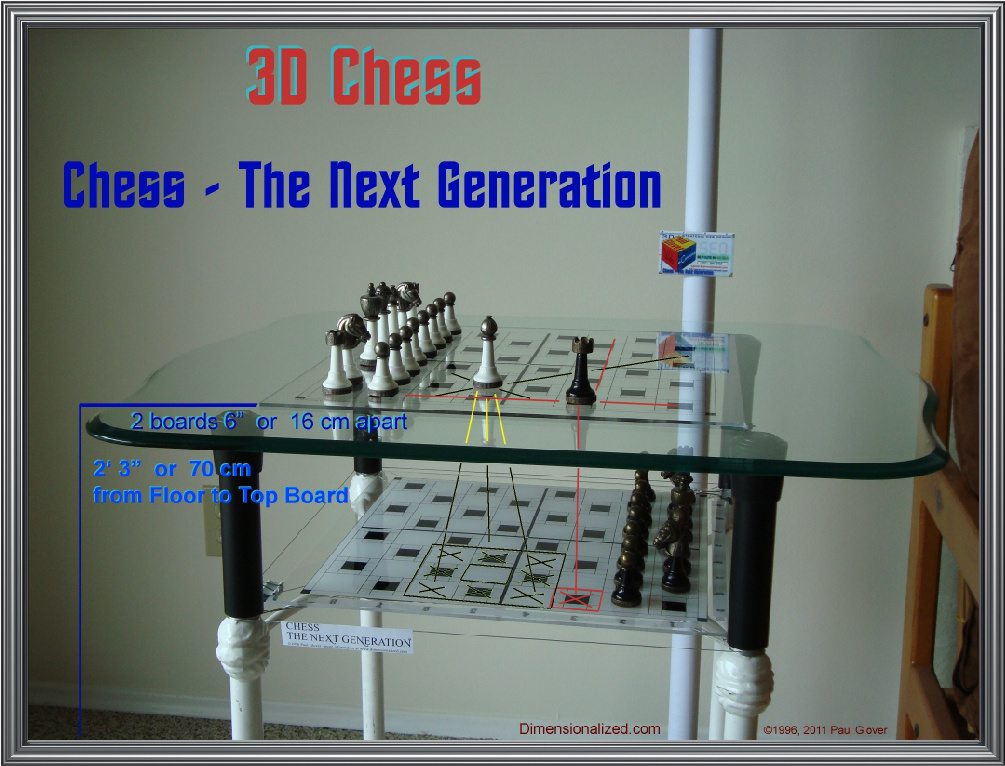
⇐ In the picture on the left we see the movement for just the Bishop & the Rook as they are opposites (Rook + Bishop = Queen in movements). Their movement on a flat board is the same as in regular 2D chess, but when it's pieces move dimensionally this is the way it's done. The video below shows all the dimensional moves for each piece, which include “en passent” and “3D en passent”.
You may be wondering - How long does it take to play?
The game takes the same amount of time as it would to play a regular game of chess on 1 flat board. In-fact, it takes about the same number of moves as well.
Watch a 14 move game to Checkmate!
This game covers almost all the moves.
Build Your Own 3D Chess Game Board
Items Needed:
This is the just one way to build a 3D board game.
- Two Game Boards
- Four Luminessence clear Glass Tealight holders (they come in different sizes)
(although you could use 4 wine glasses that are about 5-6 inches high) - Four Erasers or something to elevate the bottom board by 1cm or half an inch.
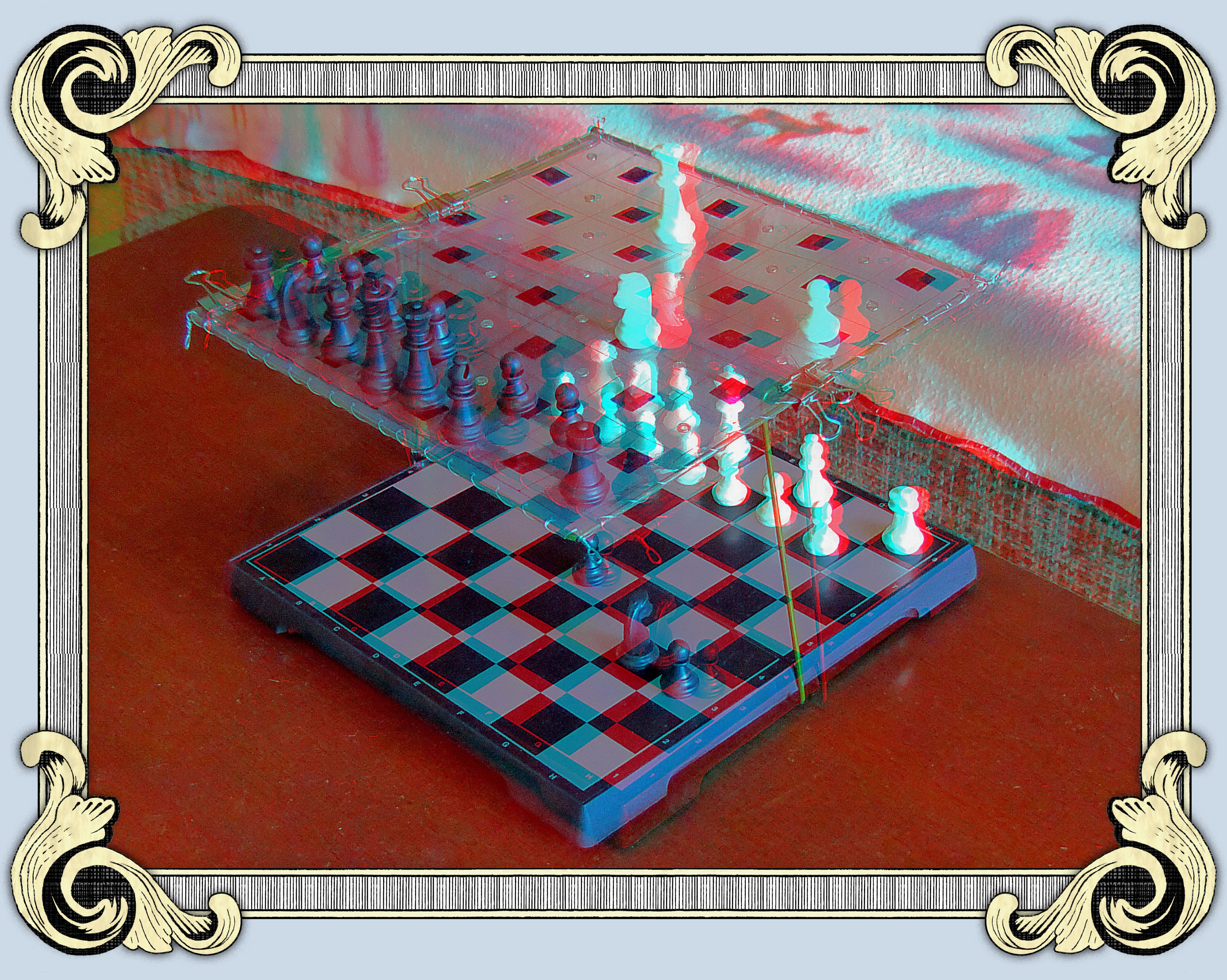
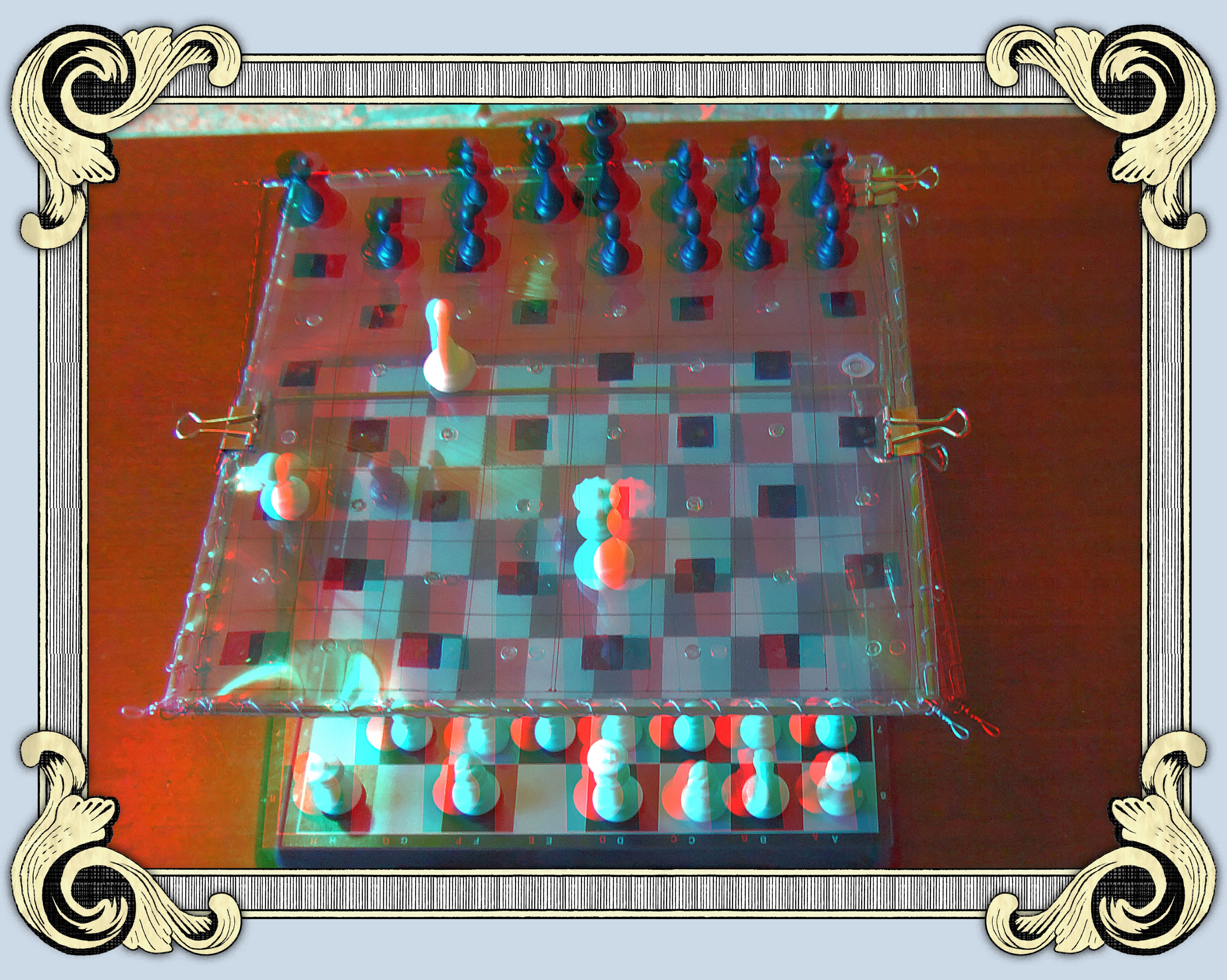
- Then slide the Tealight holders under the bottom board and place the top board on top of the Tealight holders.
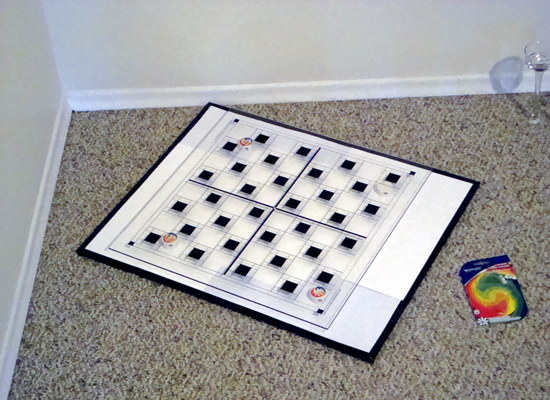
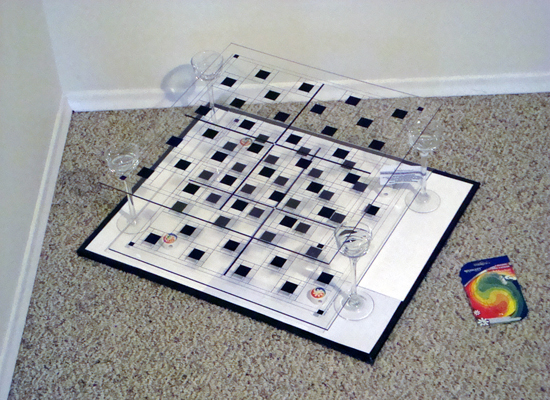
To give you better perspective, use red/cyan 3D glasses which will give depth of field. It will look real!!
3D Chess, In 3D (with those red/cyan 3D glasses)
Portable 3D Chess
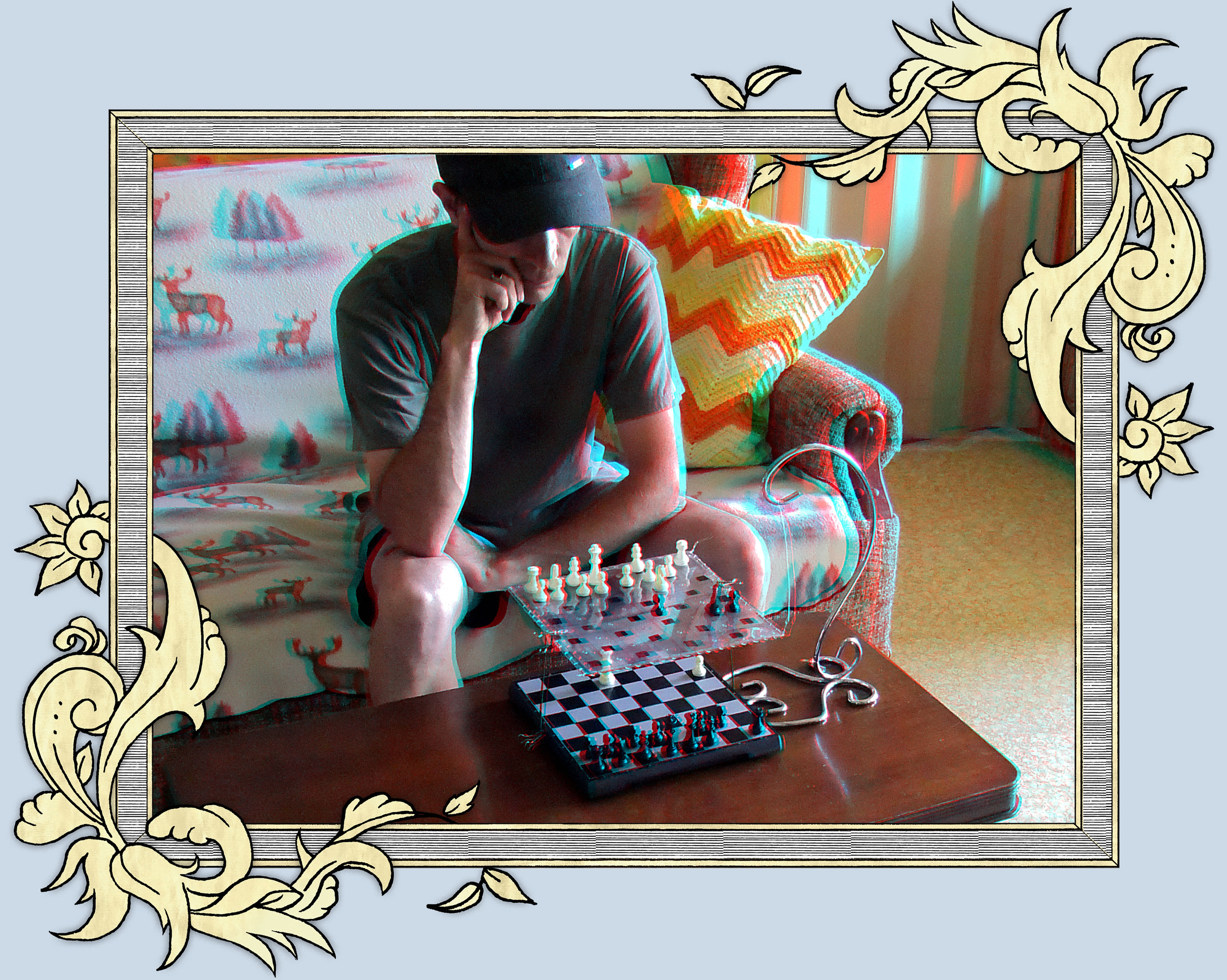
Deep In Thought
Paul Glover201508121725Something to Think-about …
When playing regular chess (or 2D flat 1 board chess), you only have a certain amount of good opening moves to make. Some moves are bad moves or losing moves. However you must move the pawns to get things in motion (except the knights). Therefore, you are limited to what you can play as a good bunch (1st five moves) of opening moves!
However, when playing 3D Chess (or “Chess — The Next Generation”), you have 16 possible opening moves! There is also an incredible number of opening combinations (1st five moves) that would never have existed in regular 2D chess. Plus it’s more exciting from the very 1st move.
Now that you have figured out the above, why not play the game with four people?
3D Chess Table
2D vs 3D Chess
2D Chess Board:
You can Hide
but you can't Run.
3D Chess Board:
You can Run
but you can't Hide.
"Here's a fabulous thing someone said."